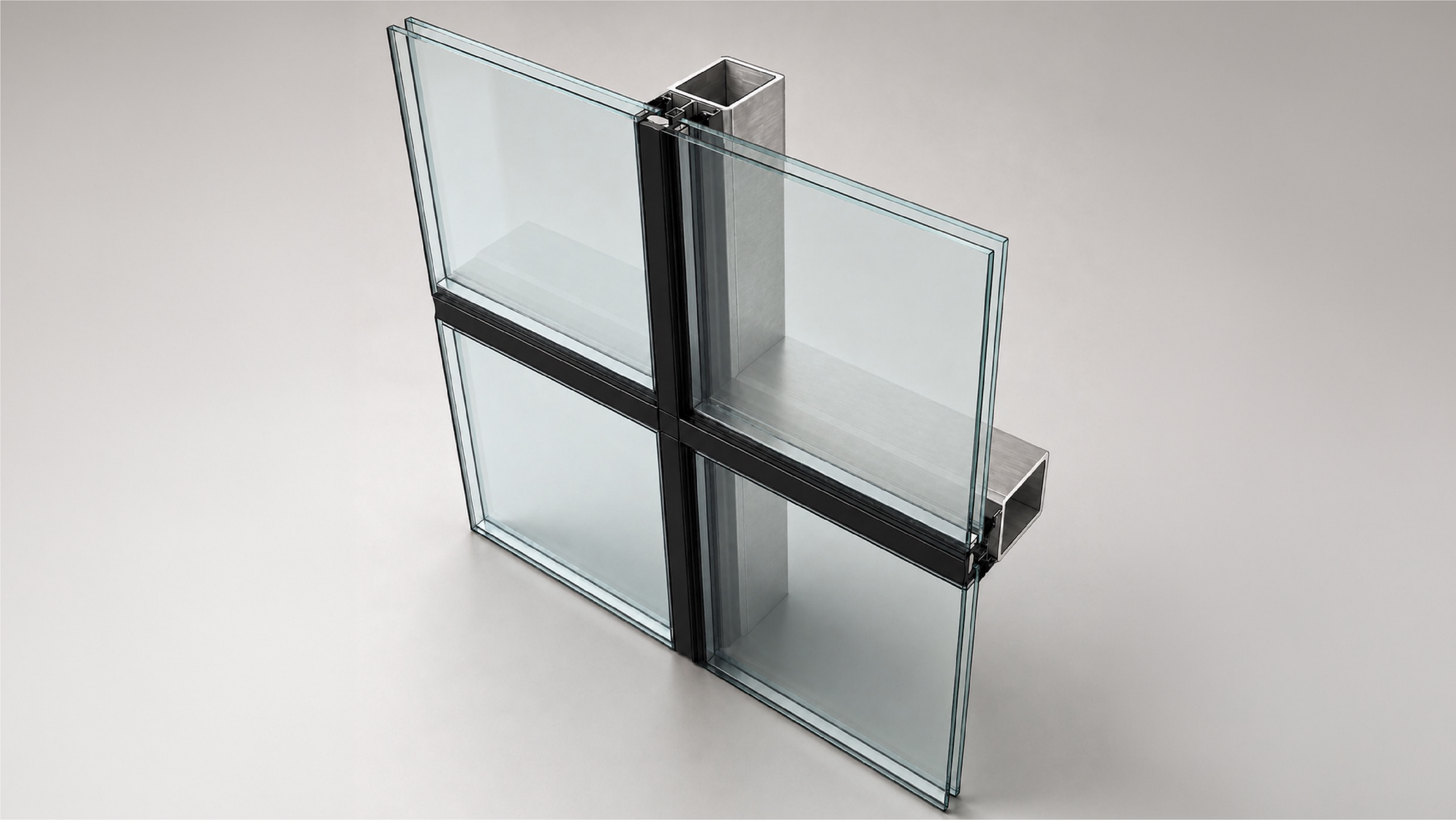
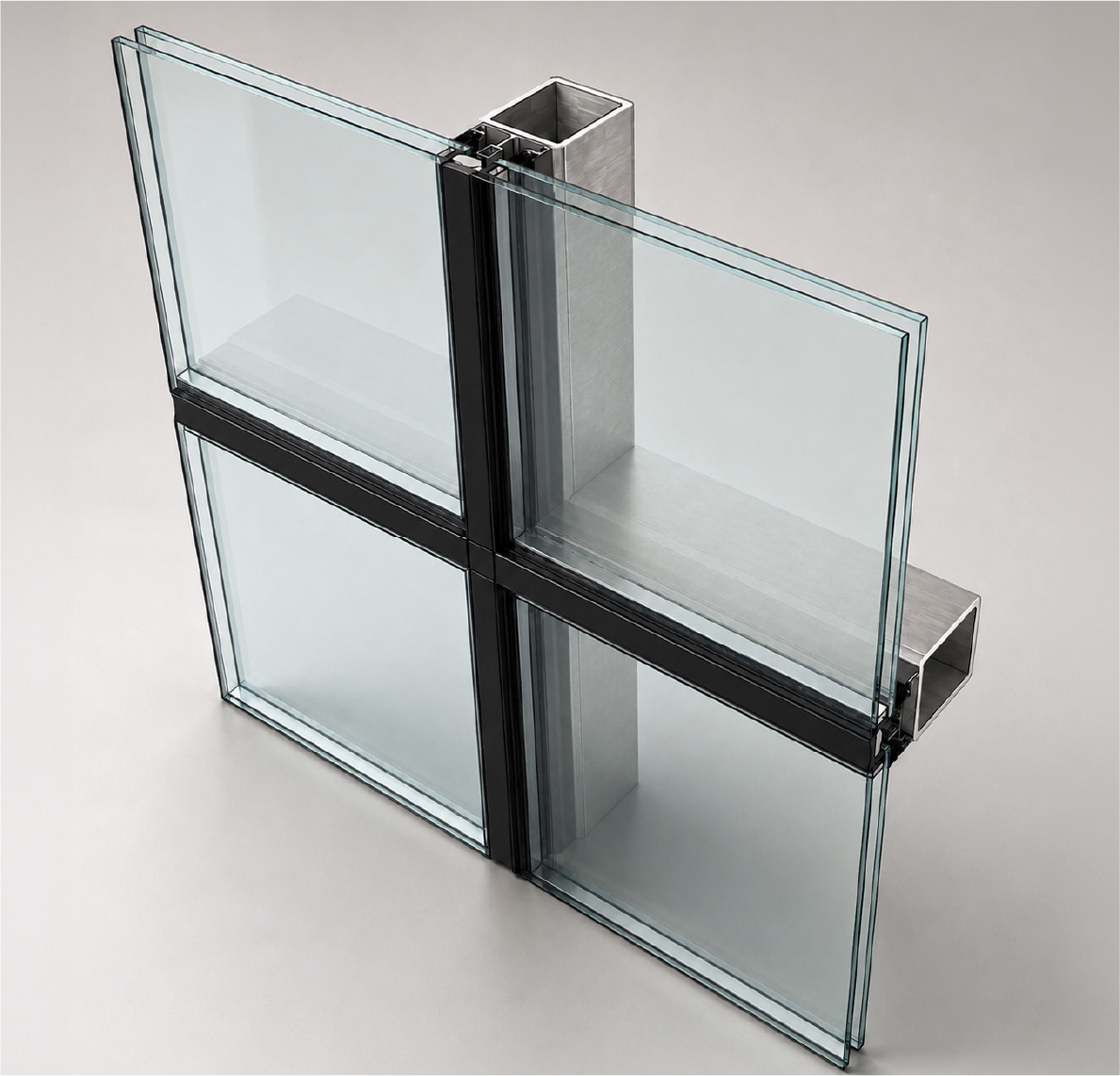
A slim silicone-glazed mullion and transom system, structurally bonded for a cap-free exterior.
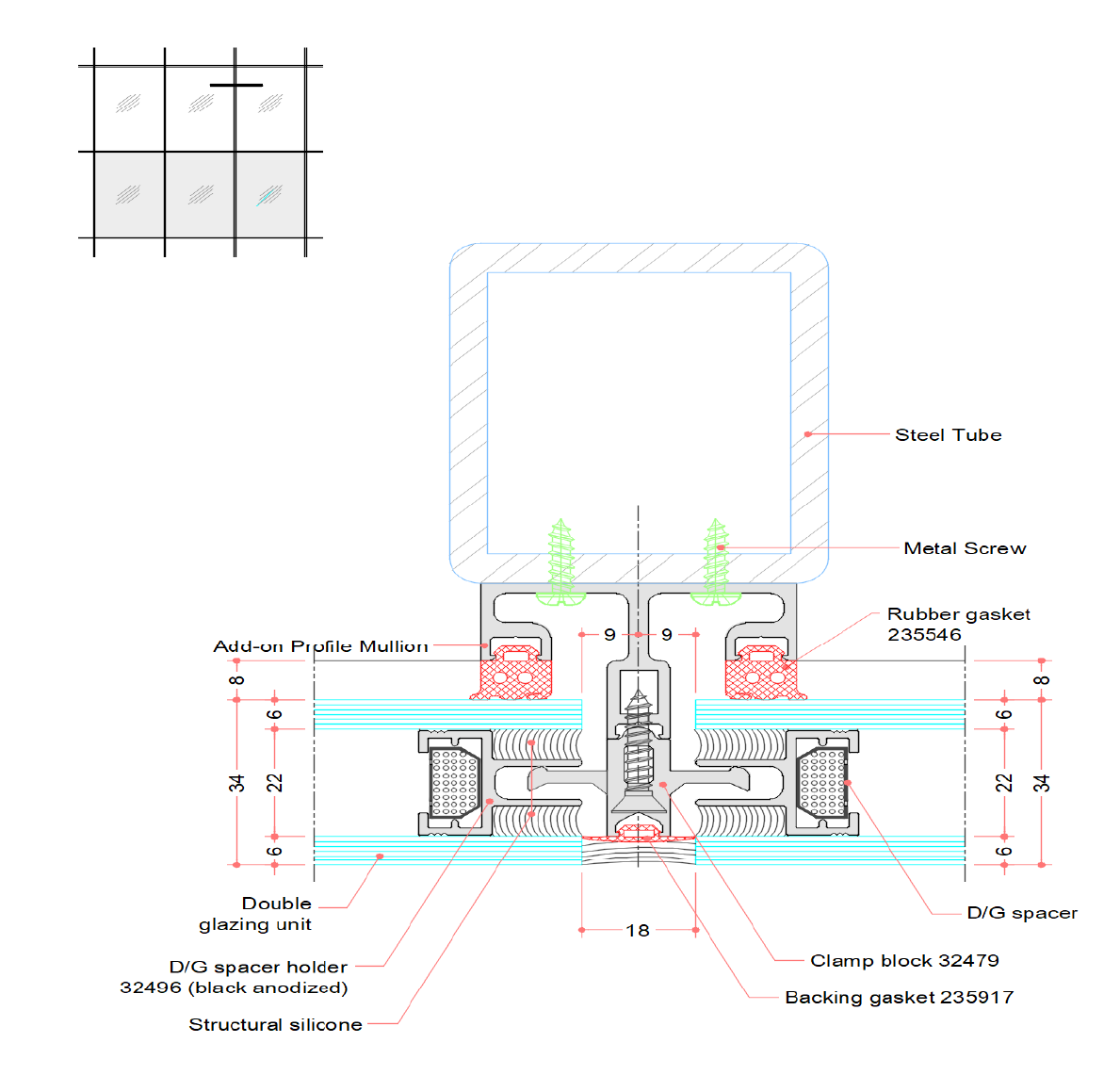
The double-glazed assembly is held by a structural silicone joint rather than a cap — a slim exterior grid conceals the glass retention entirely, giving the façade a clean, flush appearance.
System Reading
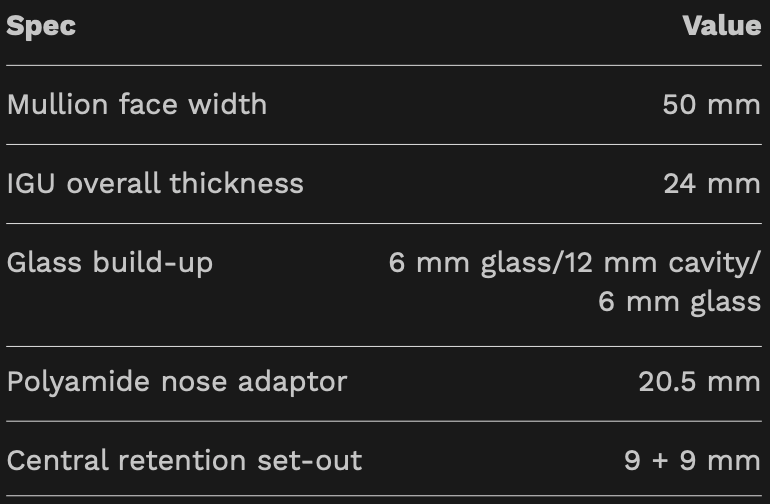
50 mm mullion face — Defines the primary vertical grid and captures glazing on both sides.
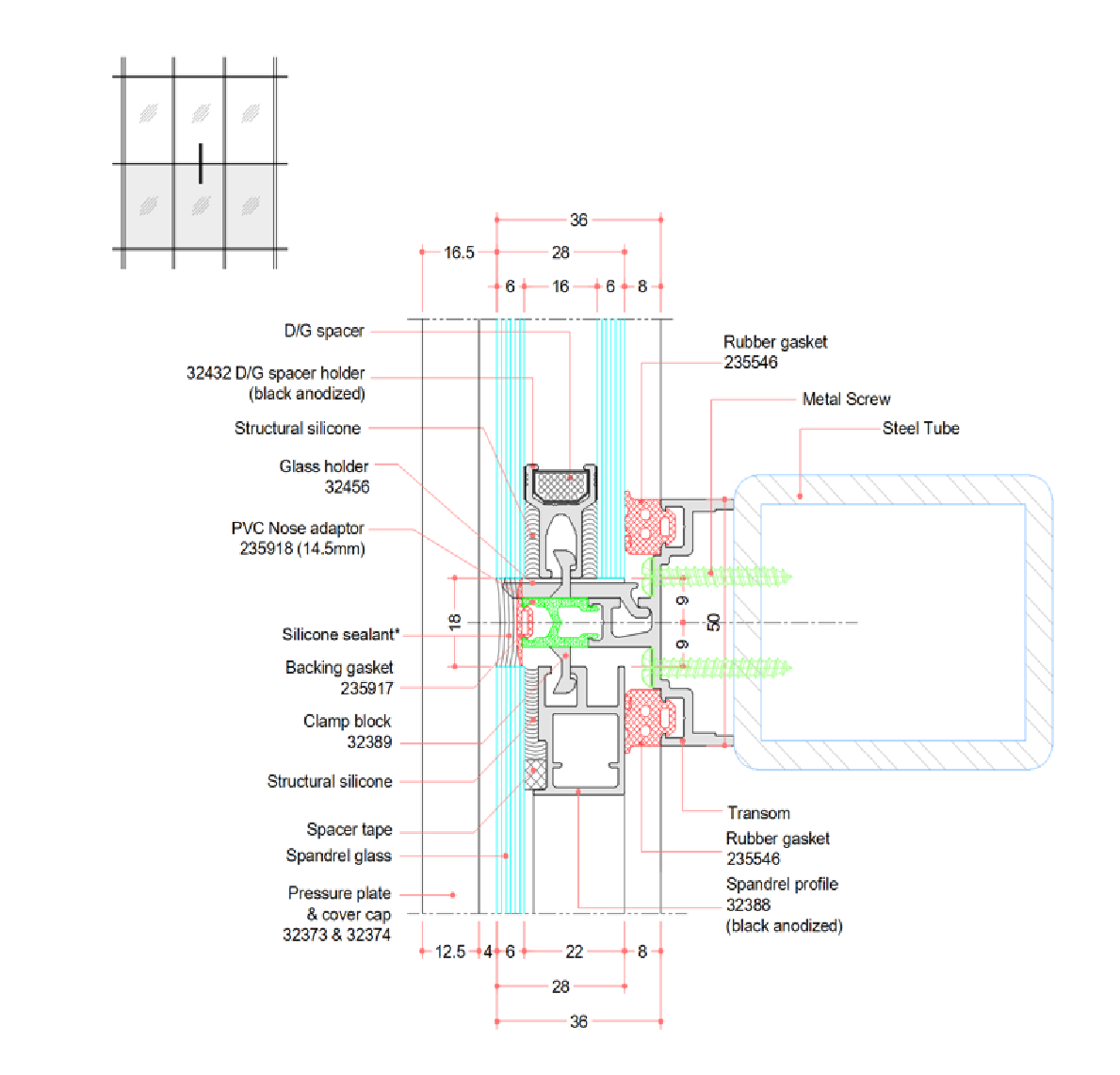
Structural glazing joint — An 18 mm central joint coordinates silicone, backing gasket, and clamp block.
Double-glazed units — A 6/22/6 mm build-up gives 34 mm overall thickness.
Continuous weather seal — Rubber gaskets and structural silicone form the perimeter sealing strategy.
Key Dimensions — Mullion Section
The horizontal mullion coordinates two 34 mm glazing units.
Assembly principle:
Mirror-symmetrical glazing retention around the mullion centreline.
Functional Stack — Transom Section
The vertical transom separates vision glass from the spandrel.
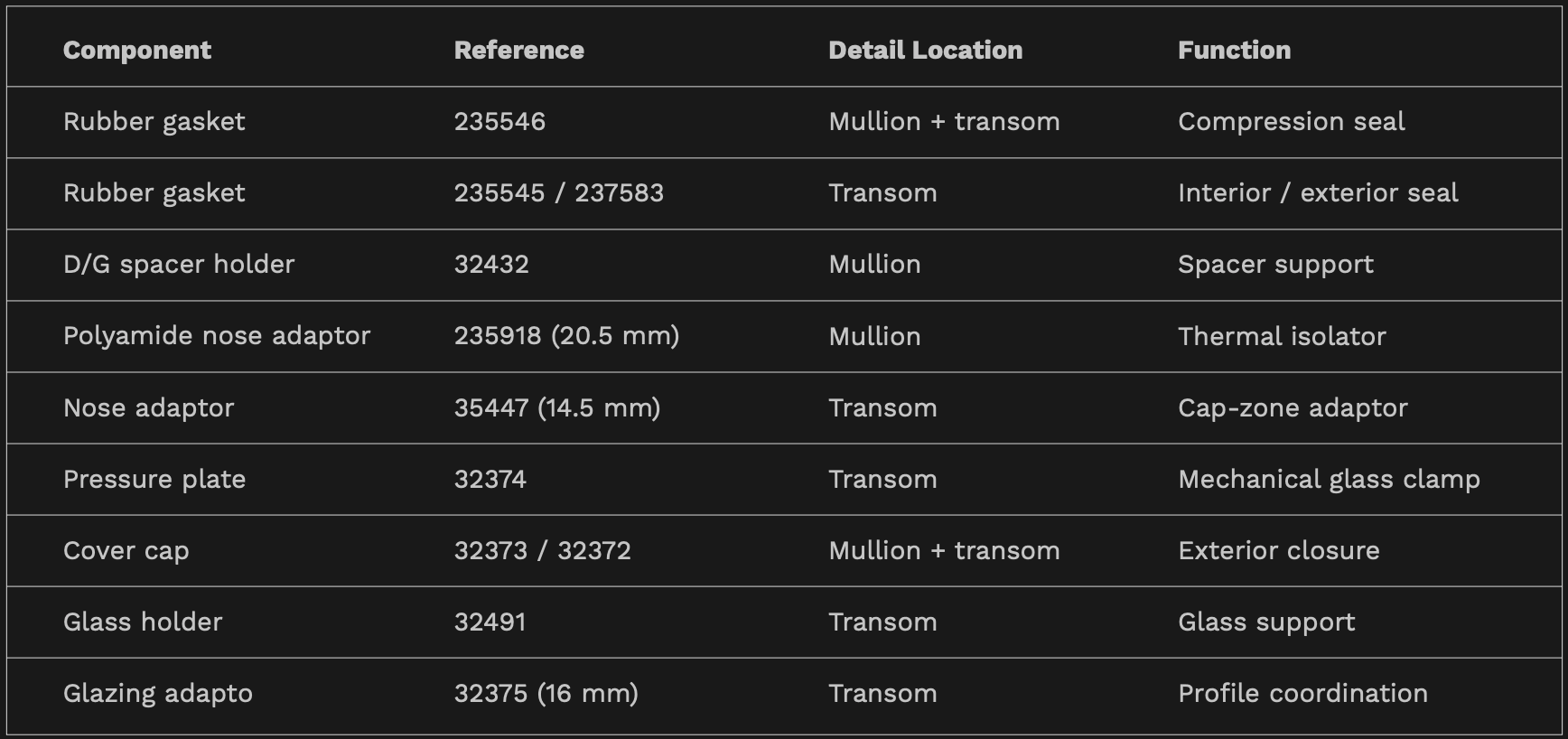
Vision IGU — D/G spacer holder, structural silicone, and PVC nose adaptor.
Transom support — 50 mm profile zone with setting block and glass holder.
Mechanical retention — Clamp blocks and glass holders coordinate the glazing unit with the mullion and transom profiles.
Speak to Our Technical Team
Before fabrication, our technical team confirms the system supplier, validates the glass specification, checks the structural silicone bite, and coordinates drainage and fabrication tolerances — issuing finalised mullion and transom sections for approval.